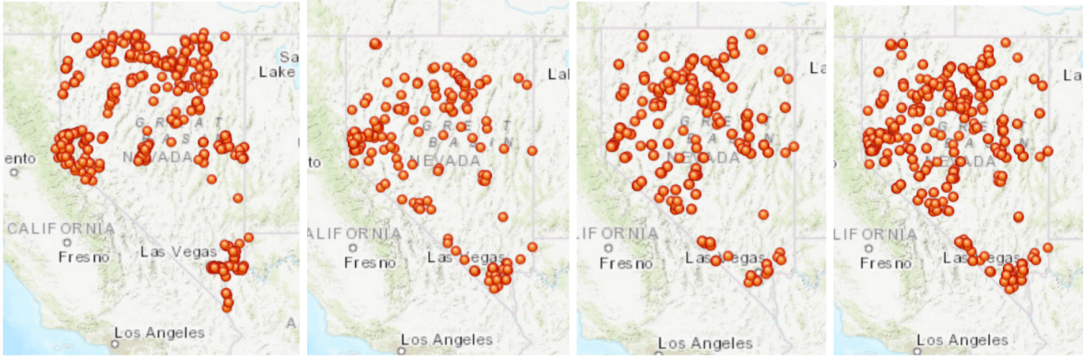
I finally got my term project for the GIS for Data Science class I took in Fall of 2022(!) up on GitHub. It was my first real experience with the “data science is 90% data cleaning, 10% fun stuff” thing and I certainly learned a lot!
I’m blessed with an Esri license through my school, so the analysis uses arcpy, the ArcGIS API for Python, and Spatially Enabled DataFrames. The final product was a writeup with some data visualizations and more extensive data communication through an ArcGIS (Jupyter) Notebook, both of which are now hosted publicly on GitHub along with the geodatabase with the data I used.
aka: Analysis and Classification of a Sample from the Ronald N. Hartman Meteorite Collection.
What follows is a write up of my term project for the Meteorites and Solar System Evolution class I took at Pomona College in Fall of 2023.
Introduction
Meteorites provide a window into the very earliest days of the solar system and document the turbulent life of rocky bodies in outer space. Classifying meteorites is an important part of the study of meteorites as it provides structure to the information one can gather from a meteorite, indicates possible information about the meteorite’s parent body, and communicates this information to others succinctly.
Much of the process I use in this project to collect data on and evaluate my meteorite was first introduced to me in Dede Chapline’s 2023 Pomona College senior thesis project titled “Petrographic and Geochemical Analysis of Selected Samples from the Ronald N. Hartman Meteorite Collection.” Her thesis does not seem to be publicly accessible, which is a shame, because it’s a great piece of work. For her thesis, she pulled a set of meteorites from Pomona’s collection and classified them using the technology available at the college. Here, I follow her procedure with just one meteorite, and I’m greatly indebted to her work with the collection.
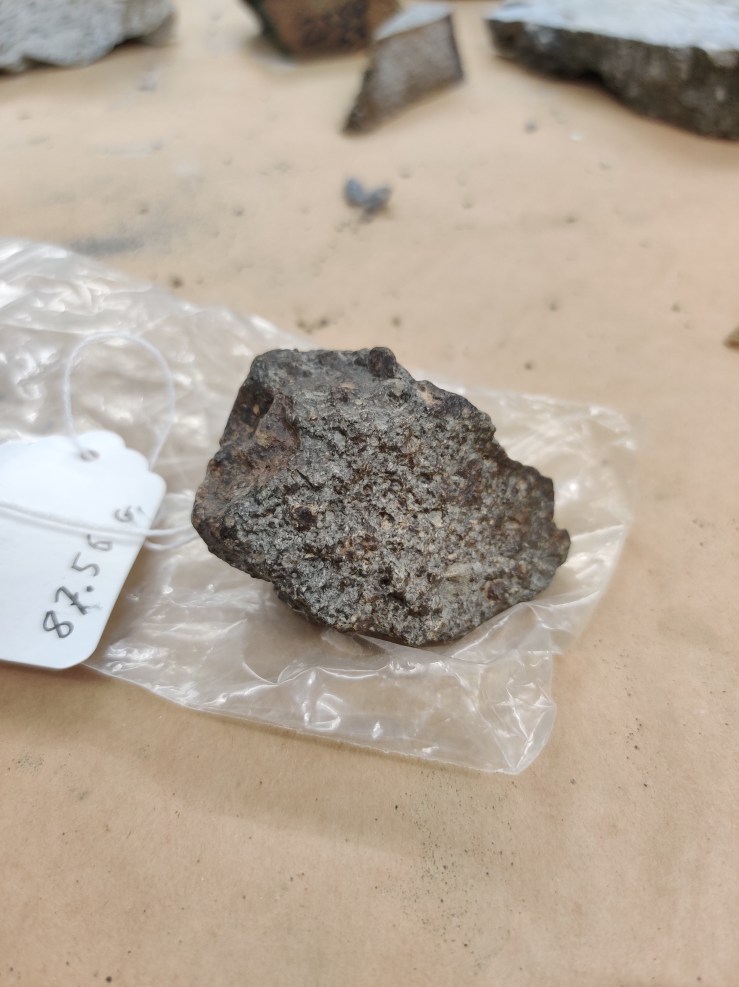
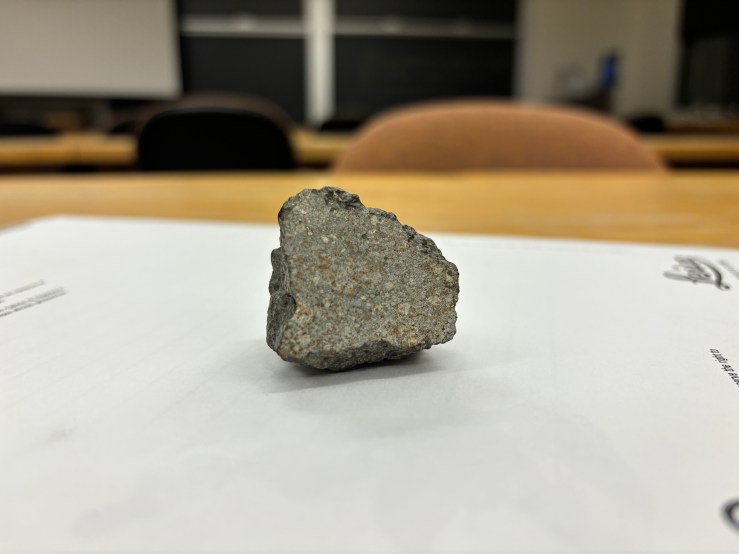
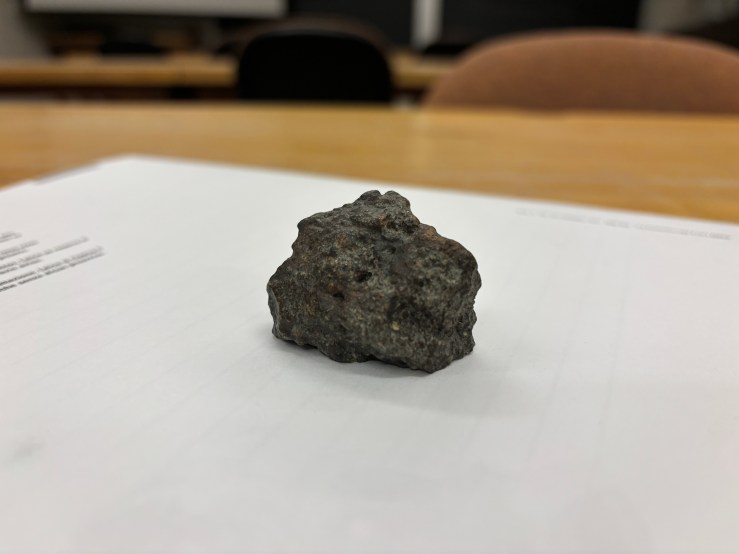
Pomona received a set of largely unclassified meteorites in 2011, according to research Dede did on the history of the collection. I chose one meteorite from this collection that had still not been classified, and labeled it AA-UM-1 (Ainslee Archibald Unknown Meteorite 1). I chose it specifically because it had not yet been cut open for hand sample analysis or thin section analysis. The hand sample before slicing and thin section preparation was 87.56 g and had no other information with it. It is somewhat angular with a little ablation and a light fusion crust (Fig. 1). The sample also has visible weathering from its time on the Earth’s surface, as it is a find rather than a fall. When cut open with the rock saw, the meteorite reveals chondrule formations and I estimate ~5% reflective metallic content (Figs. 2 & 3). It has oxidation halos and veins around speckles of metallic material. The texture is chondrule dominant, with relict chondrule material between more distinct chondrules. I thus conclude it is a chondrite, and focus my classification on determining which kind.
Figure 1: Fusion crust and ablationFigure 2: Chondrule formationsFigure 3: Reflective metal
The main classification framework for this project is based on the one laid out in Weisberg et al. 2006 (Fig. 4). In this framework, there are three classes of chondrites, Carbonaceous, Ordinary, and Enstatite (in addition to two groups that don’t belong to any class). These classes are further subdivided into clans and groups. The objective for this project is to classify AA-UM-1 into a class, clan, and group.
In classifying the meteorite, it is important to consider the overall mineral modes. Specifically, I gather data on the iron content and the ratio of olivine to pyroxene in the meteorite because I theorize the meteorite is an ordinary chondrite because of visual similarity and how common ordinary chondrites are when compared to other classes. Information on iron content and the ratio of olivine to pyroxene is important to delineate between the H, L, and LL clans of the ordinary class. Petrographic characteristics are also important for classification, so I specifically investigate the relative amounts of matrix, CAIs, and chondrules and the size and texture of chondrules.
Secondary objectives to the issue of classification are to determine the meteorite’s petrologic type, shock grade, and weathering grade. Petrologic type describes the degree of aqueous alteration and thermal metamorphism and can be determined by thin section examination. Shock grade and weathering grade are also determined through thin section examination.
Methods
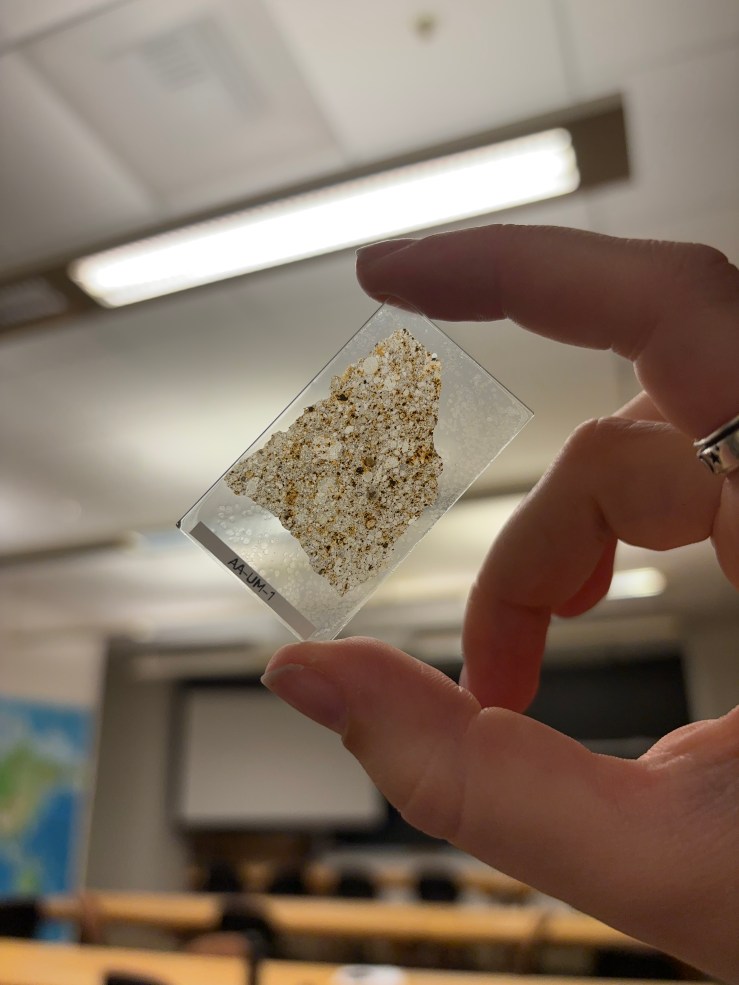
After choosing the meteorite and observing the hand sample, I cut a billet and send it off to be made into a thin section. I look at my thin section in both plain polarized light (PPL) and cross polarized light (XPL) on a Leica DM750 Microscope to determine many petrographic characteristics. I investigate the first-order mineralogy in the thin section to identify which common meteorite minerals are present and their abundances. I also note the size of the chondrules and the distinction of their textures. I approximate the metal abundance by viewing it under PPL. I search for CAIs and evidence of shock. I estimate the relative amount of matrix versus chondrule and note the amount of recrystallized matrix. I record this information via notetaking and document the evidence via mobile phone photography.
In addition to examining a thin section, I conduct Wavelength-Dispersive XRF Analysis. I powder 1.0017 grams of the sample using the agate dish in the RockLabs SRM C+RC shatterbox. Agate is used to avoid metal contamination. A fused bead is created to homogenize the sample for analysis. A high dilution of 4.0075 flux for a 4:1 flux to sample ratio is used. The spectrometer measures major elements and selected trace elements.
Data/Findings/Results
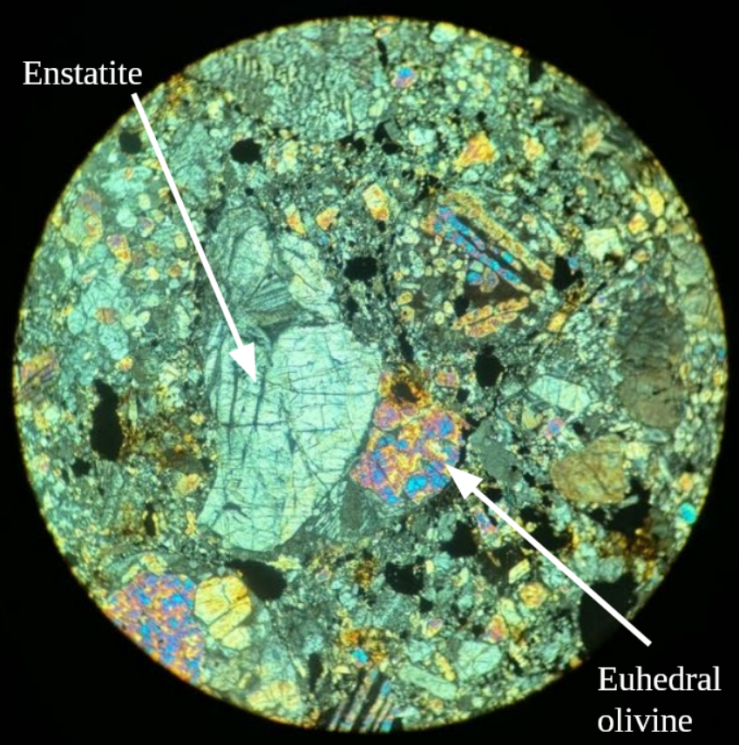
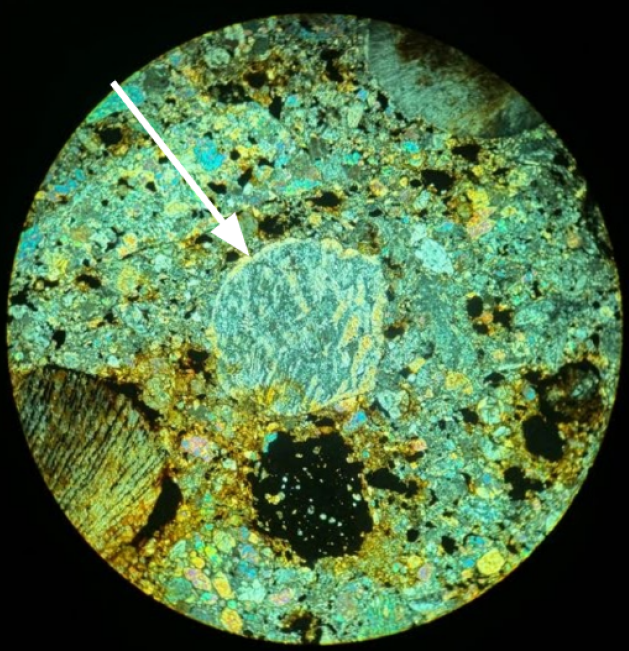
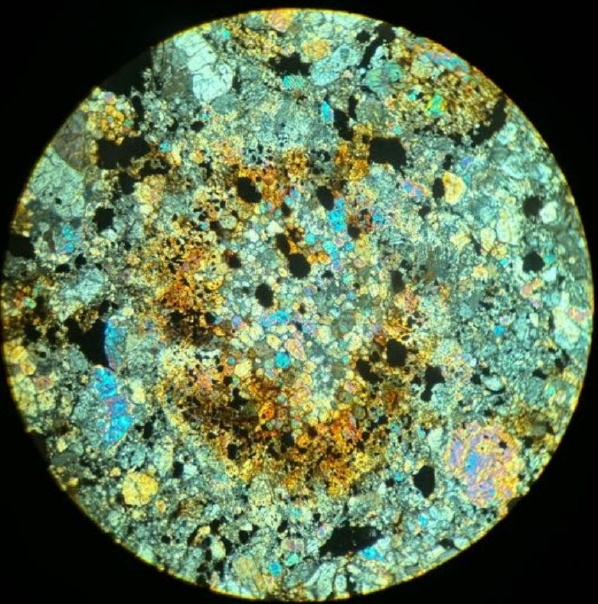
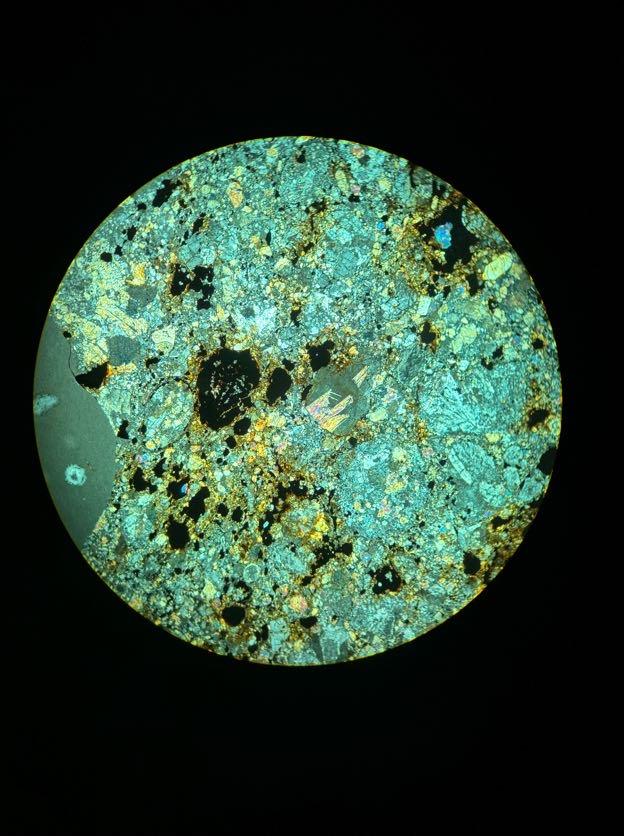
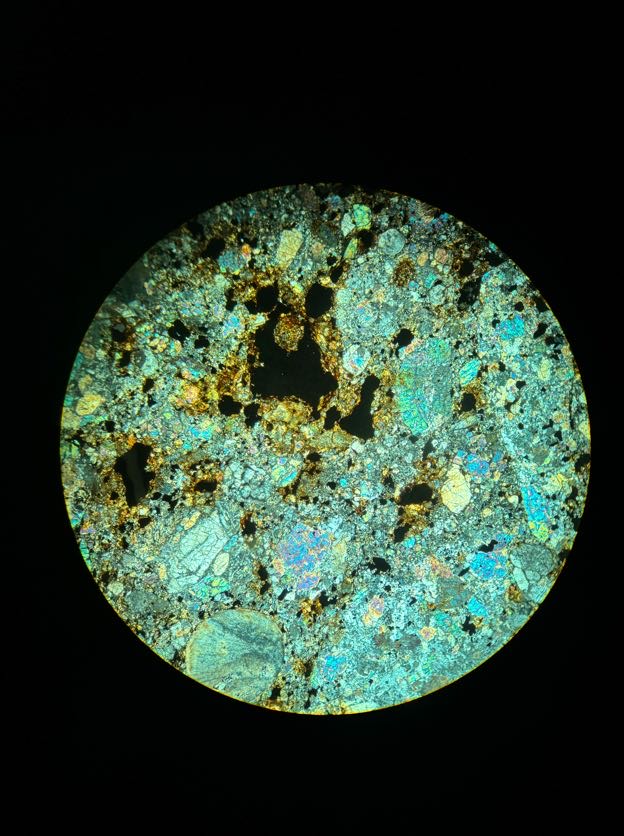
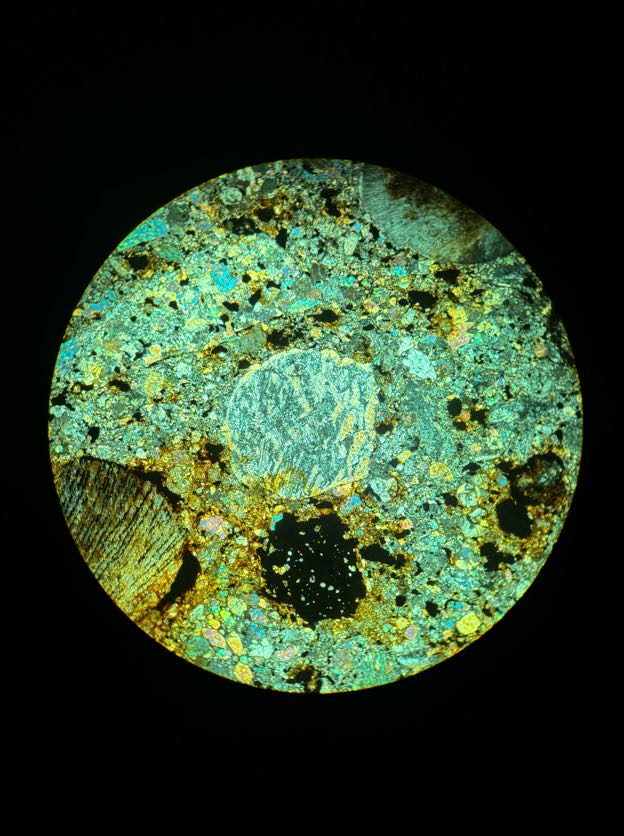
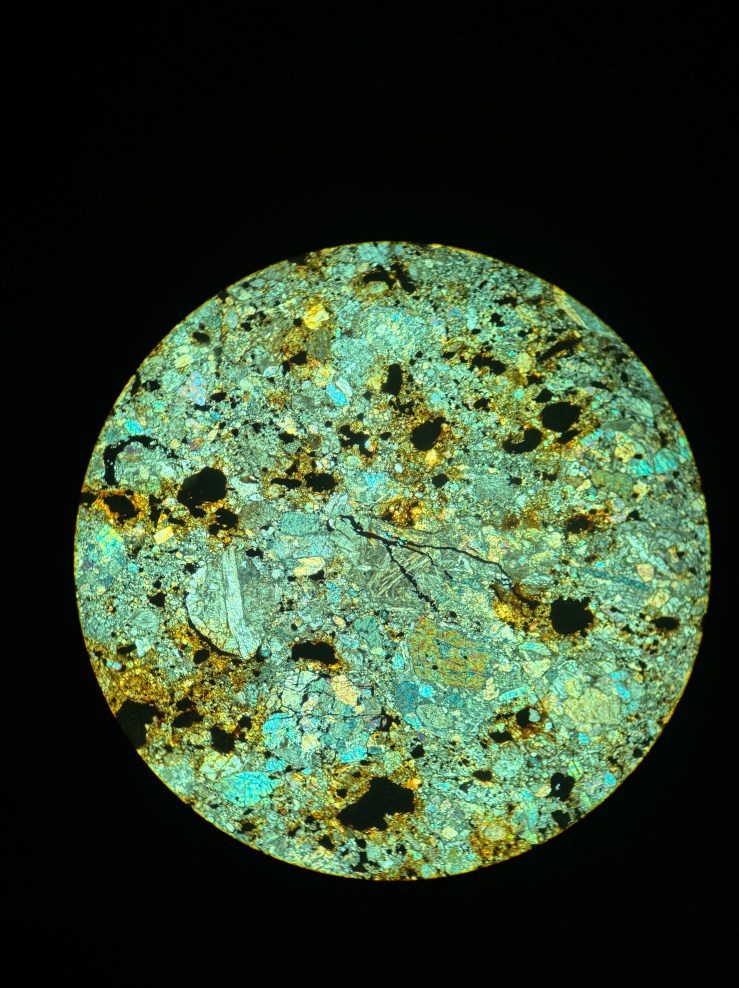
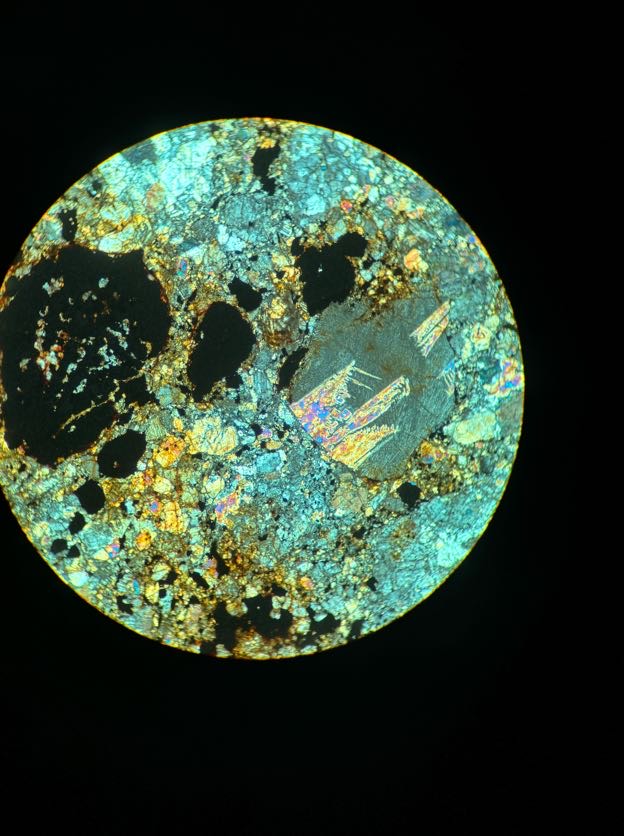
Petrologic type is determined by the condition of the chondrules and matrix minerals relative to their ideal crystal form. Most chondrule types are represented in the sample (Table 1). The composition is chondrule-dominant, with most of the material being poorly defined relict chondrules with some moderately defined chondrules rather than glass, metal, CAIs, or recrystallized grains. There is significant evidence of matrix recrystallization, however, as there is very little visible clear, glassy matrix. In between moderately defined chondrules are occasional euhedral olivine grains and some brecciated enstatite (Fig 5.).
Figure 5: Euhedral olivine grains and some brecciated enstatite within a recrystallized matrix.
The field of view is ~2.2 mm.
I am unable to find any clear examples of CAIs in the thin section. The approximate free metal abundance in reflected light in the thin section is 5%.
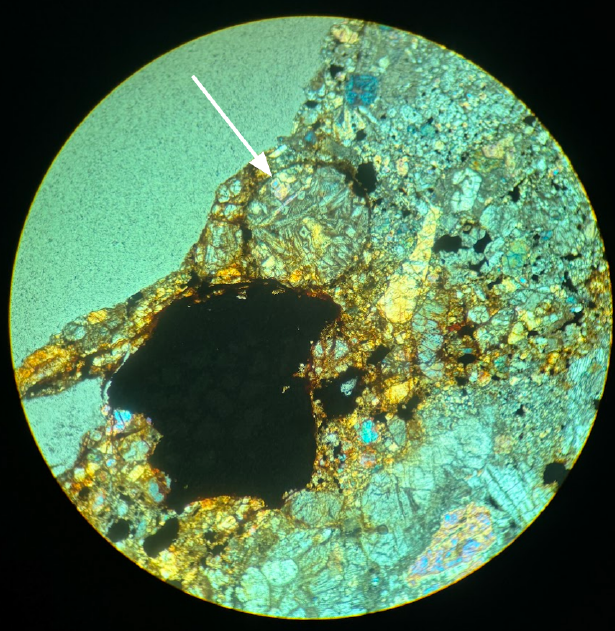
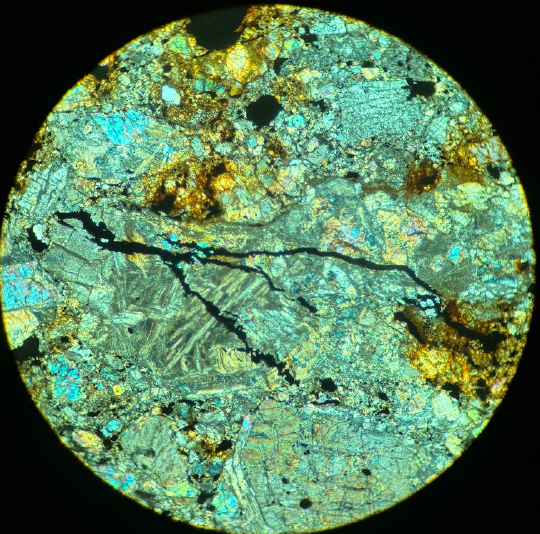
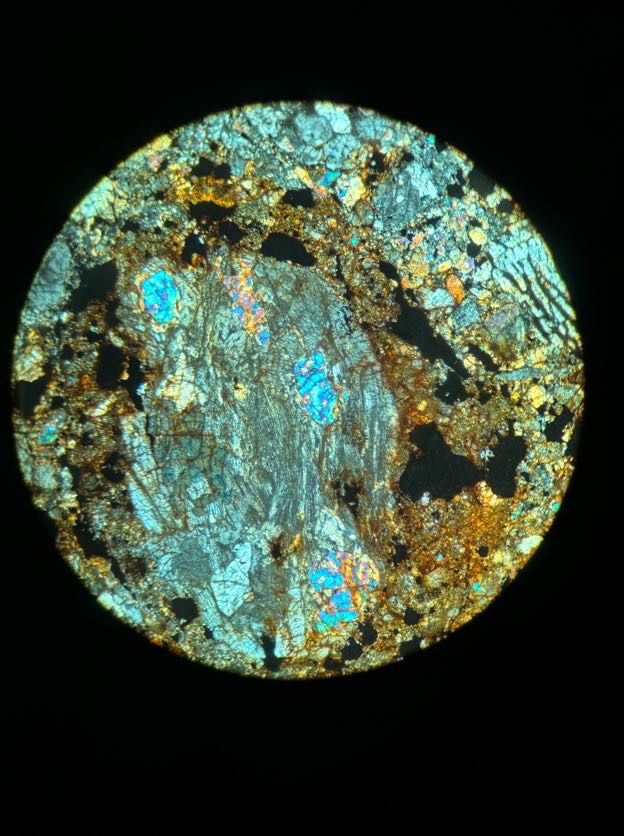
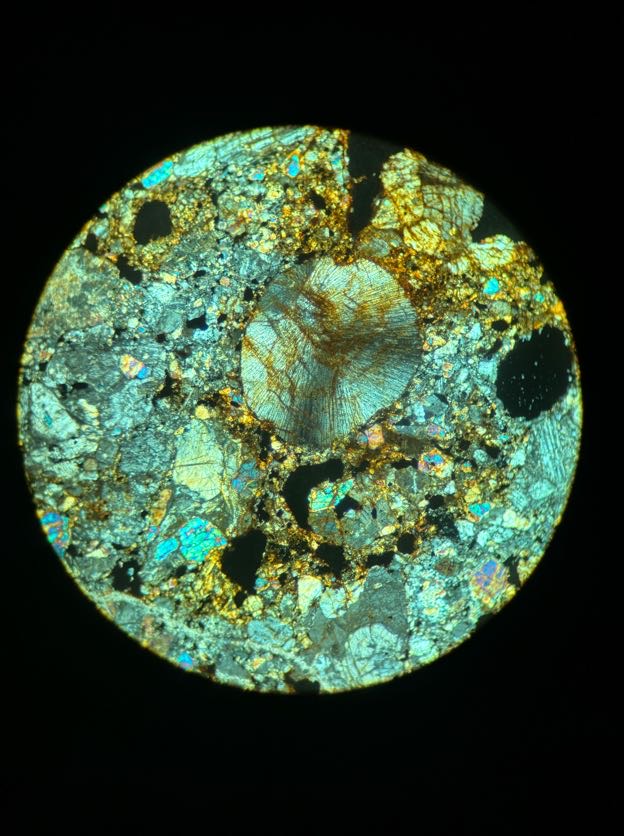
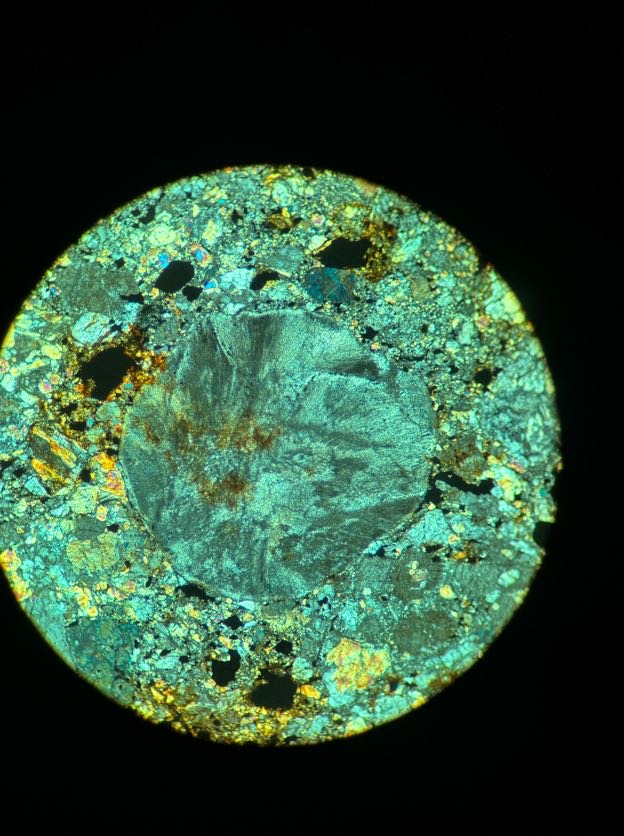
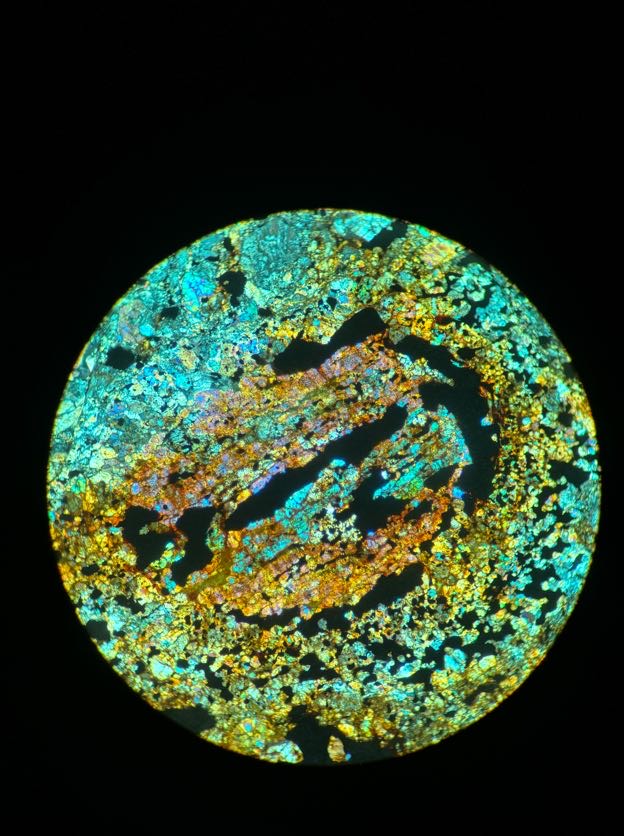
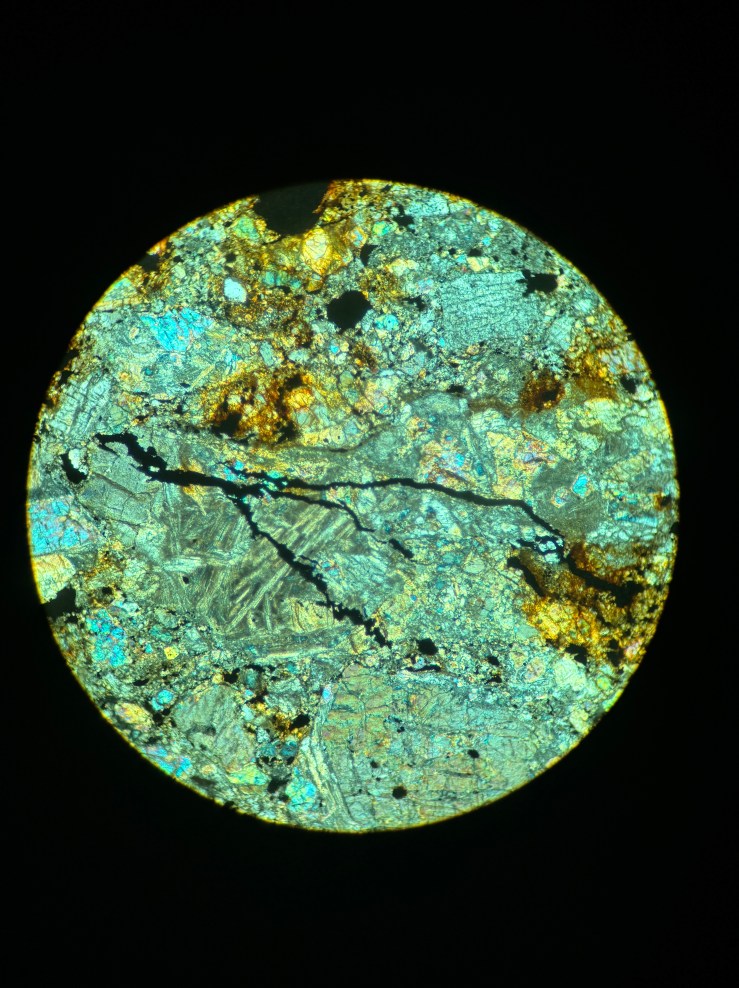
Determining the shock grade requires an assessment of shock effects in the thin section. The meteorite demonstrates non-uniform extinction and therefore can be described as metamorphosed. The crystal grains display undulose (but not mosaic) extinction throughout the sample in pyroxene and some olivine (Table 1). There are two shock veins present, one with glassy material and one with opaque crystalline material (Fig. 5, Fig. 6). Similarly, determining the weathering grade requires an assessment of oxidation and silicate replacement in the thin section from time on the Earth’s surface. The meteorite has significant metal oxidation and staining (Fig. 7).
Figure 5: Shock vein (glassy)
(~2.2mm)Figure 6: Shock vein (opaque along line) (~5.5mm)Figure 7: Metal and oxidation (~5.5mm)
The results of the whole-rock chemistry from the XRF spectrometer described in the Methods section are within the ranges expected for the meteorite, according to Dede’s thesis. The SiO2 weight percent is 36.94%, Al2O3 is 2.01%, Fe2O3 is 30.59%, MgO is 23.5%, and CaO is 2.14%. The total oxide weight percent is 98.282%. Plots of important elemental ratios as compared with known ordinary and carbonaceous chondrites both from the literature and from the Pomona collection can be found in Figures 8 and 9.
Discussion: Implications, recommendations, and conclusions of the work
First, I’ll discuss the implications of the petrographic analysis. The chondrule-dominant texture present in the thin section (>70% chondrule material) and lack of evidence of abundant carbon in the XRF rules out carbonaceous chondrite class and the Rumuruti-like and Kakangari-like chondrite groups, and the presence of barred olivine chondrules rules out the enstatite class, leaving only the ordinary class.
There are three groups of ordinary chondrites, H (high total iron), L (low total iron), and LL (very low total iron). They can be differentiated on the basis of their iron content, as the names imply, but also on mineralogy. LL chondrites contain more olivine and less pyroxene, H chondrites contain less olivine and more pyroxene, and L chondrites fall in the middle. AA-UM-1 demonstrates intermediate amounts of both pyroxene and olivine chondrites (in easily distinguishable chondrites, n=9 olivine, n=8 pyroxene, n=7 mixed or inconclusive).
The meteorite demonstrates some readily distinguishable chondrules, a recrystallized matrix with secondary minerals like enstatite, and metallic minerals. It can therefore be classified as petrologic type 4. This implies a moderate degree of thermal metamorphism.
The meteorite exhibits non-uniform, undulose extinction and two shock veins, one of which is opaque. This suggests a classification of S3 for the petrologic type. Meteorites of this shock grade are weakly shocked. Also, the meteorite demonstrates a heavy degree of metal oxidation and staining, and can be assigned a weathering grade of W3.
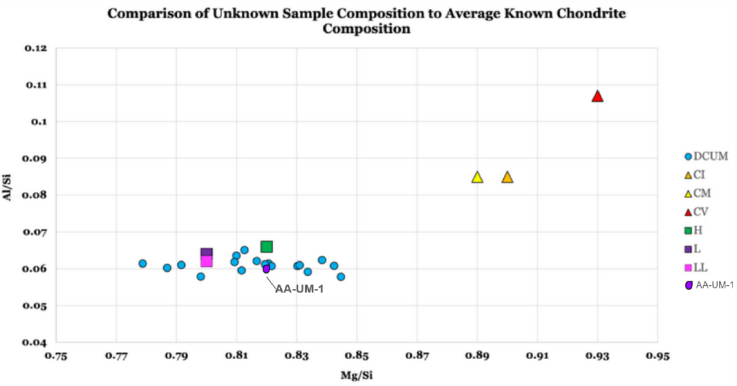
I can draw further conclusions from the bulk-rock chemistry, and it is especially helpful to compare AA-UM-1 to known compositions of chondrites. I plot the ratios of Mg/Si and Al/Si with ordinary and carbonaceous samples from Schoenbeck et al. (2006) and Dede’s thesis (Fig. 8) and from a compilation study of meteorite analyses by Jarosewich (1990) and Dede’s thesis (Fig. 10). Both plots show that AA-UM-1 falls cleanly within the range of ordinary chondrites, providing more support to ruling out the other classes. It is closest to the average chondrite composition of H group meteorites, but is in the middle of the range of Dede’s meteorites.
Figure 8: AA-UM-1 is the purple teardrop. Samples from Dede are blue circles. All other data (green triangles for carbonaceous chondrites, pink squares for ordinary chondrites) is from Schoenbeck et al. (2006). Adapted from a graph in Dede’s thesis.
Figure 9: Same plot as above, but with elemental ratios for different meteorite groups from Jarosewich (1990). Adapted from a graph in Dede’s thesis.
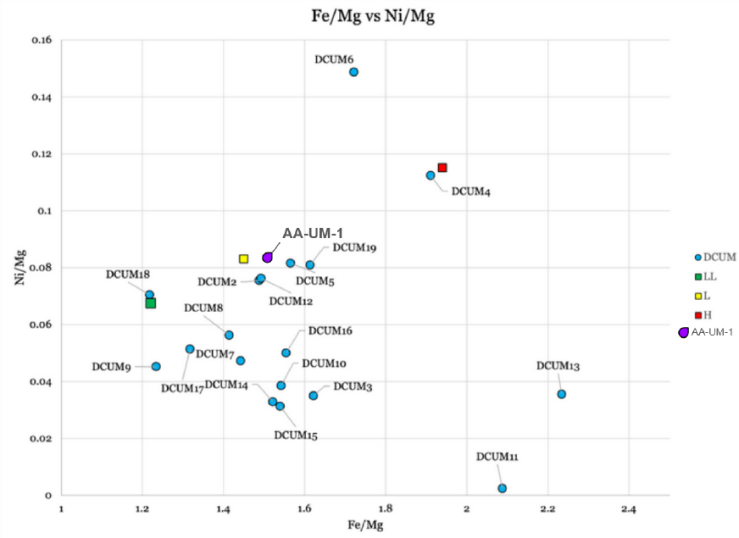
I also plot the Fe/Mg and Ni/Mg ratios to show the metal content in the sample. More iron and nickel will plot higher on both axes, which allows for differentiation between the chondrite groups. On this plot (Fig. 9), AA-UM-1 is closest to the L group average.
Figure 10: Plot of the Fe and Ni to Mg ratios for AA-UM, the samples from Chapline (2023), and additional data from Hutchison (1997). Adapted from a graph in Dede’s thesis.
Lastly, I plot AA-UM-1 by weight percent iron and metal abundance in reflected light in (Fig. 11). This again suggests it falls within the L group range.
Figure 11: Weight percent iron and abundance of free metal in reflected light for AA-UM-1 and Dede’s samples. Specifications for the groups H, L, and LL are from Saikia (2020) with extrapolation from Dede. Adapted from a graph in Dede’s thesis.
The majority of the evidence – the intermediate pyroxene and olivine composition, the total metal content (Fig. 9), and the weight percent iron especially when compared with the metal abundance in reflected light (Fig. 11) – all points to AA-UM-1 belonging to the L group of ordinary chondrites. The only data point against that conclusion is the Mg/Si and Al/Si plot with average known chondrite compositions from Jarosewich (1990) (Fig. 10), but when viewed with the data from Dede’s thesis that was developed with the exact same procedure on the same equipment, AA-UM-1 is revealed to fall squarely in the middle of the collection’s range.
Conclusions
In full, I classify AA-UM-1 as a low total iron ordinary chondrite with petrologic type 4, shock grade 3, and weathering grade 3 (L4 [S3, W3]). Classifying AA-UM-1 as an ordinary chondrite of the L group does not allow for a specific parent body to be determined. However, a small main-belt asteroid called 3628 Boznemcová has a similar spectrum to L chondrites and may be a fragment of the original parent body. The petrologic type of 4 suggests it may have formed at an intermediate point in the undifferentiated parent body. Having been classified, AA-UM-1 can be added to the growing library of formerly unknown meteorites in the Pomona collection.
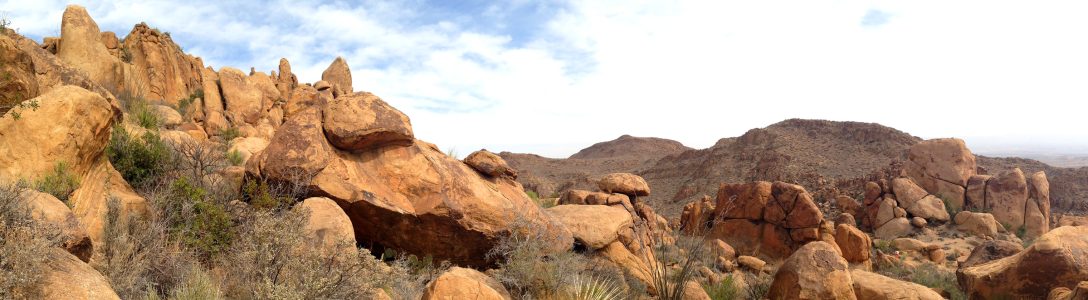
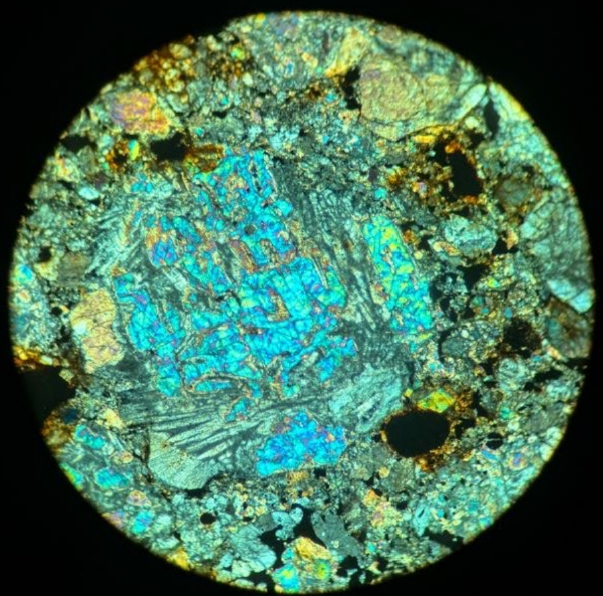
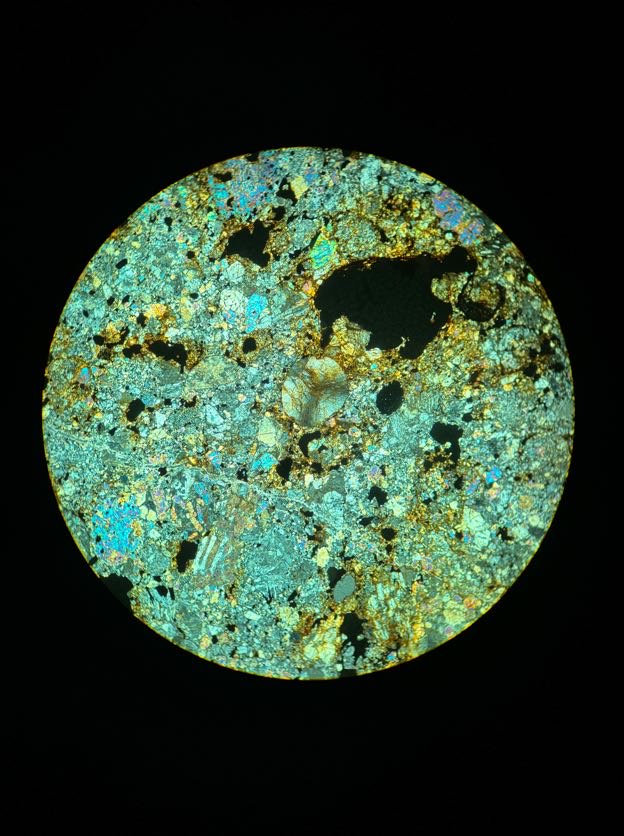
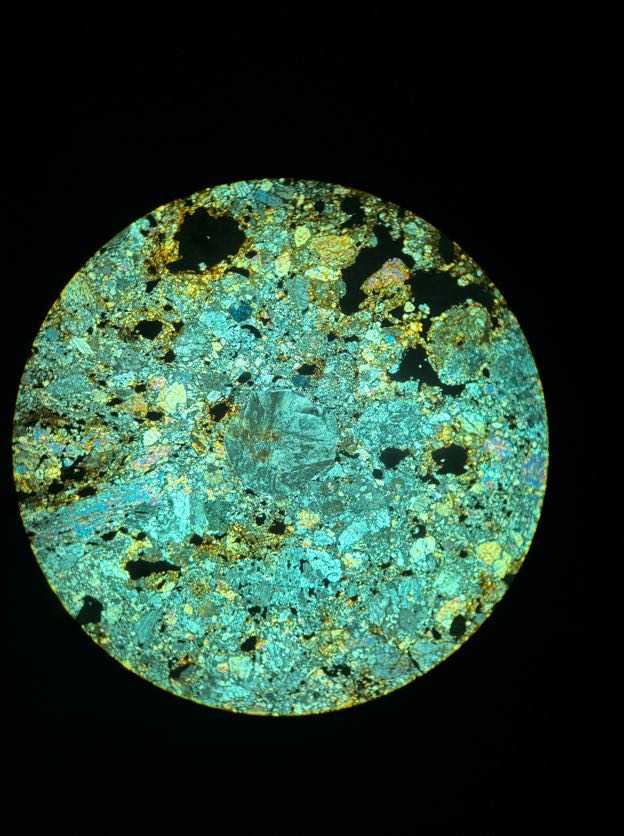
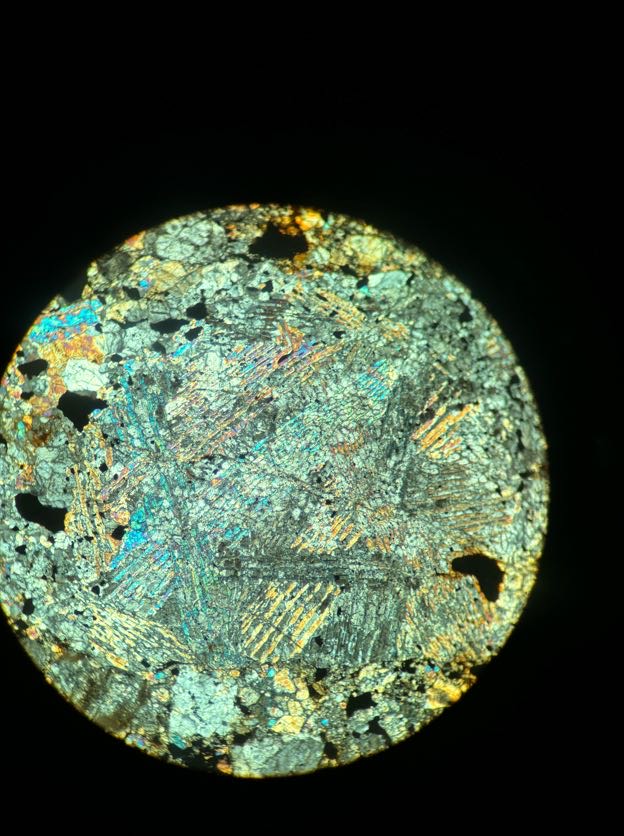
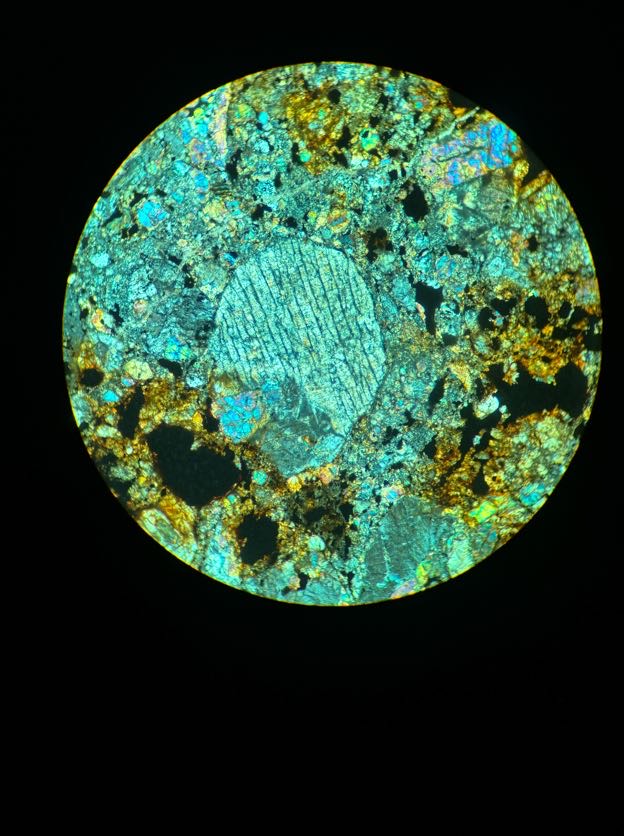
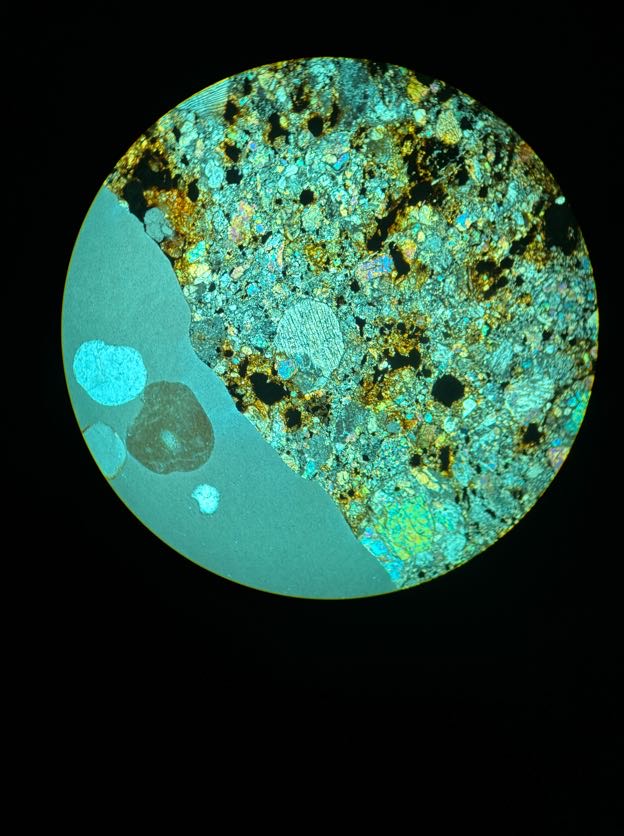
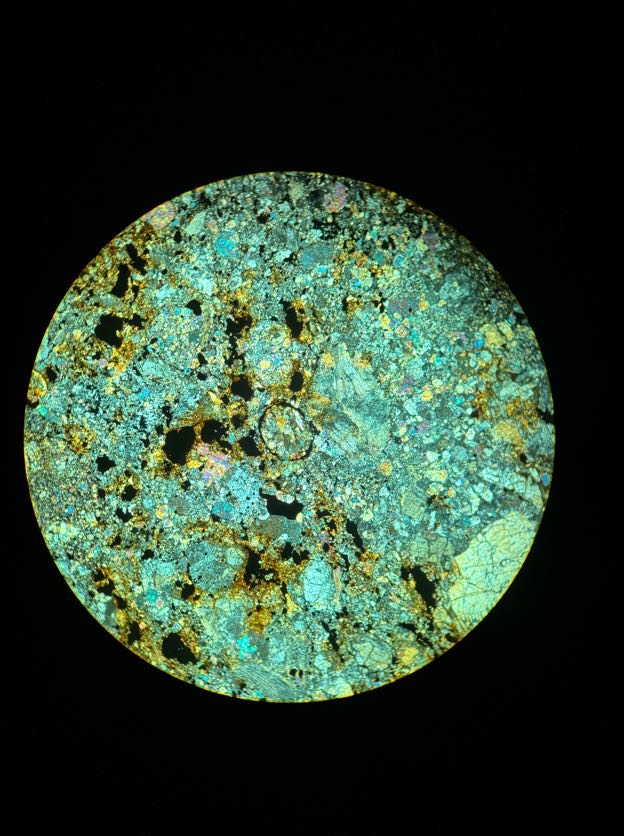
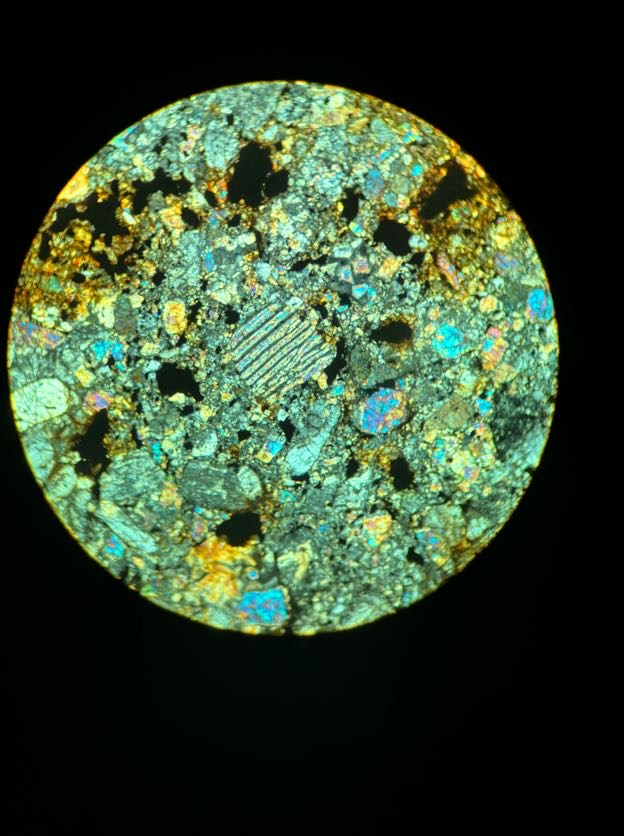
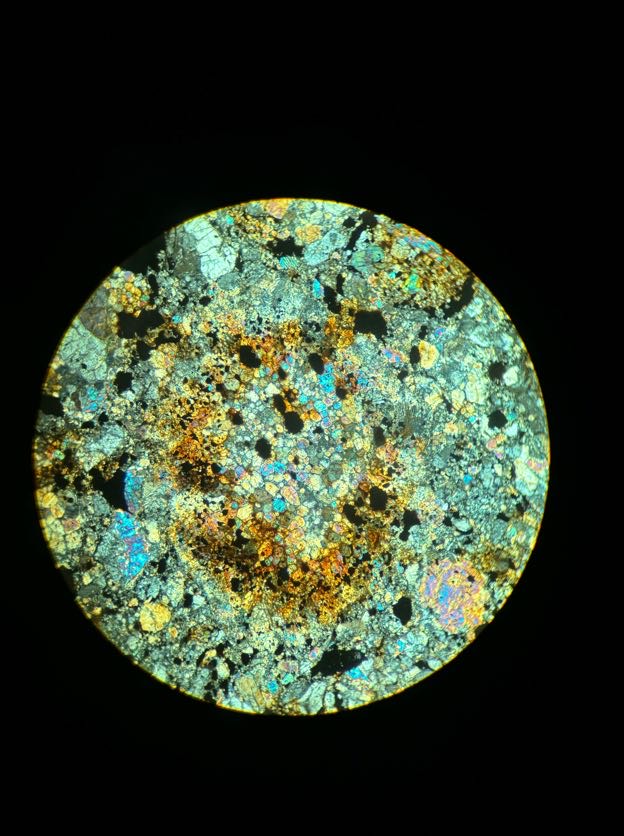
For posterity, here are the full size, unedited, and unlabeled photos from this project. If you’d like to use them for something, they are openly licensed via CC BY-NC-SA 4.0.

























 Ainslee Archibald